
The International Monetary Fund says India will clock growth of 8.4 per cent in the coming year.
The index of industrial production -- gauge of industrial activity in terms of production -- showed a 2.4 per cent growth in May, down from 6.2 per cent a year ago.
The sell-off in the equity markets, especially by foreign institutional investors, could have a ripple effect across asset classes and adversely impact consumer spending.
It is against China's interest to shift away from dollar.
Credit growth has slowed down from around 32 per cent (year-on-year) in July 2006 to around 23 per cent in August. Anecdotal evidence suggests that much of the deceleration in growth has come on the back of softer retail credit off-take.

As COVID-19 infections spike in the country resulting in restrictions in various states and impacting the fragile recovery, many economists are expecting RBI to delay the policy normalisation move, which is expected in the February review. The country has reported a single-day rise of 58,097 new Covid-19 cases as of Wednesday morning--the highest in around 199 days -- of which 2,135 are Omicron cases and later in the day, the first confirmed Omicron-related death has also been reported. Maharashtra recorded the maximum number of 653 Omicron cases followed by Delhi at 464, Kerala 185, Rajasthan 174, Gujarat 154 and Tamil Nadu 121 cases, taking the total tally of cases to 3,50,18,358.

The central bank may need to further ease the rates by 50-75 bps.

The Reserve Bank of India (RBI) will stay away from changing key rates - including the reverse repo rate - this fiscal in the backdrop of Omicron. However, it will continue to shape the rate movements through liquidity market operations. Soumya Kanti Ghosh, group chief economic advisor, State Bank of India, said whether Omicron surge or not, there is not going to be any hike this year. However, the central bank may continue to shape rates through market operations.

The central government's deposits with the RBI had fallen to just Rs 100 crore as of June 8.

Following are comments from economists at leading financial institutions, banks and rating agencies on the interim Budget:

Urjit Patel's reappointment will raise market hopes that Rajan, will also be offered an extension when his tenure ends in September.

Of the six-member rate-setting monetary policy committee, five members voted for a 25 bps cut while one by 40 bps, the RBI said.

At a pre-Budget meeting, the FM was asked to ensure that NBFCs come out of the liquidity crisis they are facing with the help of RBI. They also spoke about the futility of trying to achieve a 3 per cent fiscal deficit target over the medium term.

If banks have a surplus, they have the option of parking the money with the RBI.

The Reserve Bank of India kept its policy interest rate unchanged at a five-year low of 6.50 percent on Tuesday.

Globalisation with small government has not been a successful pairing.

China is keen to rebalance its economy towards higher consumption, services, technology use and value-added exports. The hope is that its currency will strengthen as the world embraces it as a global trade and reserve currency, say Abheek Barua & Bidisha Ganguly.
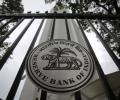
By no means do economists see the Reserve Bank of India stop at just a 25-bp cut. Some of the economists such as Soumyakanti Ghosh of State Bank of India are of the firm view that rates have room to fall by a total of 75 bps in the current financial year, starting with 25 bps in the August 7 policy.

Abheek Barua & Bidisha Ganguly explain why the US treasury should intervene if the overvalued greenback continues to rise.

OPEC's move to cut output has pushed up oil prices. From here it could go either way: oil could reach $100/barrel or an analysis of demand and supply might follow, say Abheek Barua & Bidisha Ganguly.

The RBI must cut rates to spur growth, say experts.

The dollar gained strength with the emergence of the US as the only developed economy showing signs of recovery.

It can be noted that the rupee lost nearly 7 per cent since the beginning of May as FIIs have pulled out nearly $4 billion from the domestic debt, as bond yields fell on expectation of RBI cutting rates on Monday.

Germany is now sitting on a mountain of savings.

'China could place the currency on a par with global biggies. But it has to wait to be a serious challenger.'

The majority in the markets believe that a September lift-off is likely.
Non-performing loans in the Chinese banking system stood at RMB 1.27 trillion at the end of 2015.

The fact that the US recovery needs an elaborate defence suggests that things are far from certain.

Foreign exchange reserves of the oil producers have increased by $1.1 trillion over the past decade.

Political risk culminating from elections in the US and Latin America, and evolving right-wing populism in Europe could lead to substantial volatility, say Abheek Barua & Tushar Arora.

The silver lining is that a pick-up in the US economy could help emerging market exports.
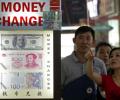
China's move to devalue its currency has exposed the fragility of its economy.

The next round of bad news could come from Europe, where banks in a number of economies such as Italy, Portugal and Greece are sitting on mountains of bad loans.

Economist Abheek Barua's insight into the global and domestic economy at the turn of the financial year.

There is a narrow chance that the central bank may cut rates in the future, according to a poll of 15 economists and treasurers.

The trinity of rising stocks, rising yields and rising dollar since Donald Trump's election has already faced a setback.

The markets stayed on edge last week due to the endless saga of Greece's problems.

RBI's status quo on rates disappoints economists.

The fuzziness of Trump's economic blueprint remains the biggest risk.
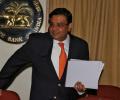
Can we find fault with RBI for not intervening enough in the market? Actually no, say some experts. A correction in rupee was long overdue.
